

Blog
Heavy Equipment Delivery: What to Prepare Before It Arrives

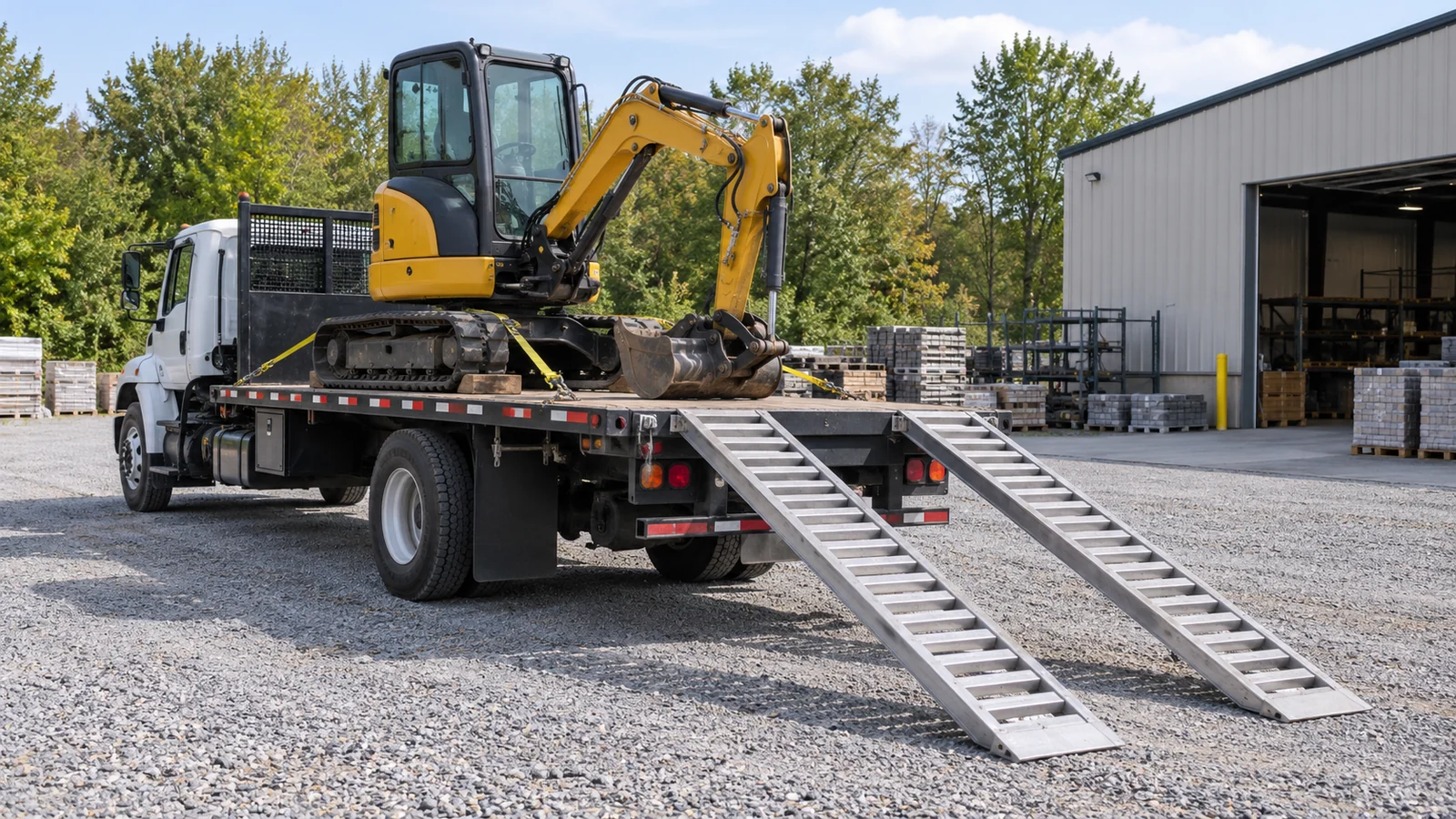
A useful heavy equipment delivery checklist starts with three questions: where can the carrier safely unload, who will receive the shipment, and what happens after it reaches the ground? Answer those before arrival day. Receiving a pallet is not the same as moving, assembling or installing the equipment.
Heavy equipment delivery: confirm what is included
Riggmont’s approved delivery service includes free shipping to all 50 U.S. states and liftgate unloading. You do not need to provide a forklift for the carrier’s included unloading service. That does not mean the driver will take equipment through your building, position it in a service bay, assemble it or install it.
The total delivery window is 7–11 business days: 2–3 business days for handling and 5–8 business days in transit. Use that window when planning availability, but do not book an installer against an assumed arrival date. Confirm shipment and appointment information before making arrangements that depend on the equipment being present.
Read Shipping and Delivery and ask support about your particular address if access is uncertain. Mention a residential location, shared entrance, locked gate or restricted receiving hours early. A complete address and reachable phone number are practical details, not minor checkout extras.
Check access before the truck arrives
Walk the route to the proposed unloading area from the street, not just from your workshop door. Note tight turns, overhead obstructions, parked vehicles and any place where a delivery vehicle would have difficulty stopping safely. If the address is on a narrow road or has an unusual approach, describe it to support before delivery.
Choose a receiving area that can be kept clear and accessible. Tell the carrier about slopes, gravel, soft ground, steps or unusual thresholds rather than assuming equipment can be moved across them. The carrier determines how unloading can be performed safely; a photograph of the approach can make the conversation easier.
Ask for the packaged dimensions, shipping weight and number of pieces for your exact order. The assembled machine’s footprint does not tell you the size of its crate. Compare the package with your available receiving space, and remember that a long crate needs room around it for inspection, not simply enough floor area to fit.
Prepare a small receiving file
Keep your order number, product model, shipment reference and carrier contact together. Download the current manufacturer’s manual for the exact model and revision. It helps you identify components and plan the later installation stage without turning delivery day into an improvised assembly project.
For example, the Tuxedo M-1500C-HR manufacturer’s manual separates assembly, operation and maintenance and identifies the model’s accessories. Use your own model’s documentation as the reference; the contents of one lift package do not establish what another should contain.
- Give the receiving person the order details and support contact.
- Have a charged phone ready for photographs and carrier communication.
- Keep a place to save the receipt and packing documents.
- Arrange availability without asking someone to lift or move heavy components by hand.
An arrival-day heavy equipment delivery checklist
The purpose of this checklist is to make receiving organized. It is not an unloading procedure. Stay clear of the carrier’s working area and let the delivery team manage its equipment. Keep children, pets and unnecessary bystanders away from the unloading location.
| Stage | Your preparation | Record to keep |
|---|---|---|
| Before arrival | Clear the agreed area and make the receiving contact available. | Order details and appointment information. |
| At receipt | Compare package count and visible labels with the shipping paperwork. | Labels, receipt and any count discrepancy. |
| Visible inspection | Look for damaged packaging or exposed damage without disturbing an unstable load. | Overview photographs and close-ups. |
| After receipt | Report concerns and preserve packaging while support advises you. | Messages, original packaging and product identifiers. |
Describe visible problems specifically on the delivery paperwork before signing when possible: a crushed corner, torn wrapping or an absent package is more useful than a vague statement. Take photographs of the shipment as received, its identifying labels and the affected area. Keep a copy of the paperwork.
Manufacturer receiving guidance, including BendPak’s freight-damage guidance, emphasizes inspection, photographs and preserving packaging. Those are useful documentation habits, not a replacement for Riggmont’s terms. External manufacturers’ deadlines, fees and claim rules do not automatically apply to your Riggmont order.
If you find damage or missing pieces, contact support@riggmont.com immediately with your order number and evidence. If damage becomes apparent only after unpacking, report that promptly too. Do not assume signing a receipt automatically removes every remedy, or that an apparently minor problem is safe to ignore. Do not operate damaged equipment while waiting for guidance.
Plan movement, assembly and installation separately
Decide before delivery who will handle the equipment after the carrier unloads it. Inside placement is not included. If the final location is through a doorway, around a corner or in another building, obtain a separate movement plan from a suitably qualified provider. Do not count on the driver to improvise that service.
Keep the planned installation location distinct from the receiving area. Floor, power, clearance and installation requirements come from the selected model’s manual and appropriate professionals. There is no universal concrete thickness, electrical circuit or anchoring method for every type of equipment. A blog checklist should not be used to design those details.
Avoid discarding packing material or mixing hardware from different boxes until you have documented the contents. Save the manual, product identifiers and support correspondence together. An organized handoff lets the installer work from the right information and gives support a clear starting point if something is missing.
Frequently asked questions
Do I need a forklift for delivery?
Not for Riggmont’s included carrier unloading service: liftgate unloading is included. Movement after unloading and inside placement are separate arrangements; discuss unusual access before arrival.
Will the driver install the equipment?
No. Included unloading does not include installation, assembly or inside placement. Arrange those services separately for your particular equipment and location.
What should I do if the package is damaged?
Photograph the shipment, note visible issues on the receiving paperwork when possible, retain the packaging and contact support immediately. Do not use damaged equipment until the issue has been assessed.
Have a delivery-access question?
Send your order details and a description of the approach to Riggmont support. Call +1 (478) 758-4153, Monday–Friday, 9 a.m.–5 p.m. ET. Pre-purchase questions go to sales@riggmont.com; returns and exchanges go to returns@riggmont.com.