

Blog
How to Choose a Mini Excavator for Your Property or Jobsite

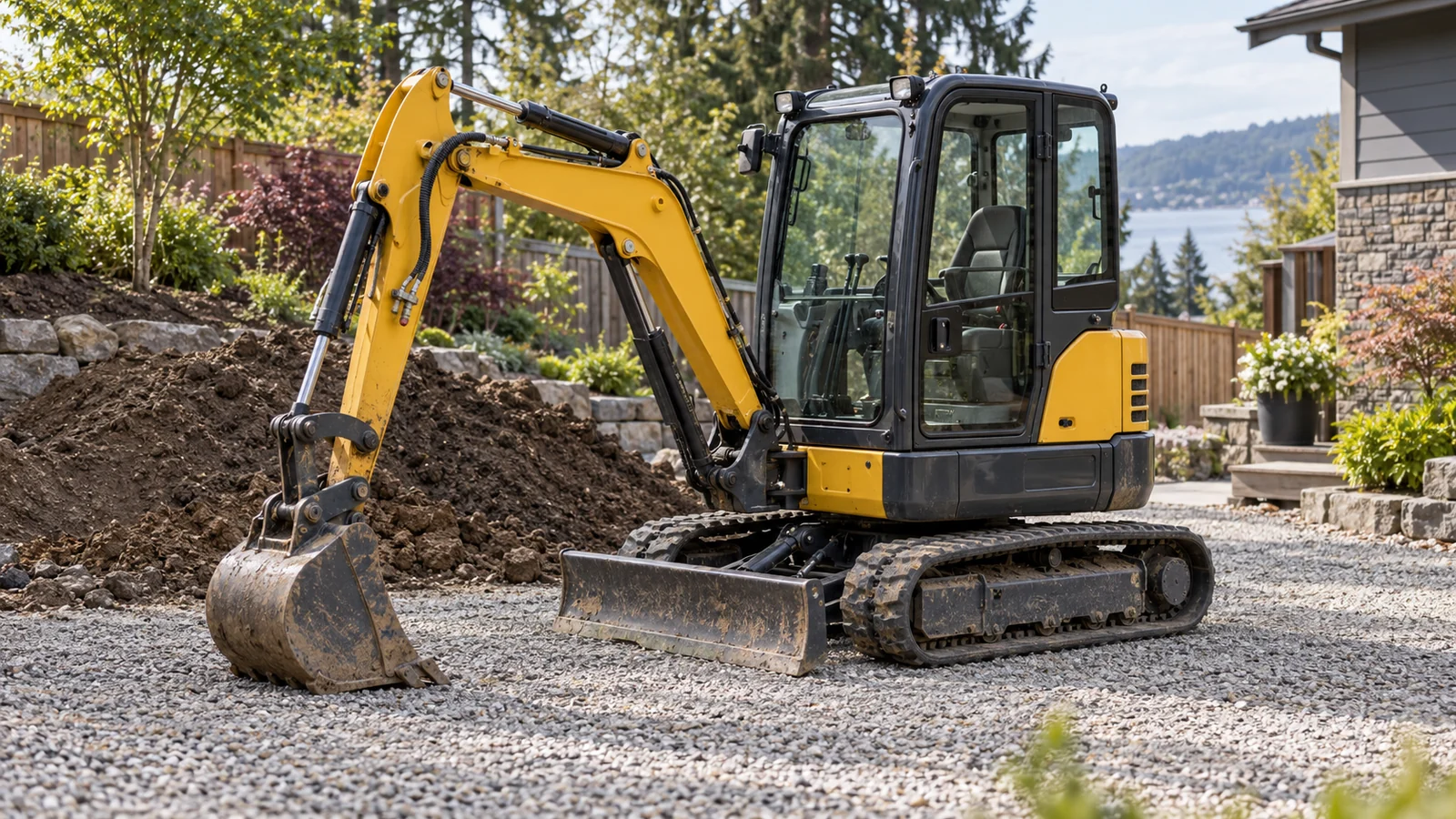
Choose the machine around your site, not just its size label
The right mini excavator is the smallest machine that can safely meet your actual digging, access, attachment and transport requirements—not simply the lightest model available. Start this mini excavator buying guide by measuring the route into your work area, writing down the work you need done and identifying how the machine will travel between sites. Then compare the exact model specifications and operator manual rather than relying on a broad weight-class description.
A homeowner clearing space for landscaping and a contractor working behind occupied buildings may face similar access restrictions but very different workloads. Use the questions below to build a shortlist that fits your property or jobsite. This is purchase-planning guidance, not an operating, lifting or transport procedure.
Start your shortlist with Riggmont’s mini-excavator category, then request the documentation for any model you are considering.
Mini excavator buying guide: key takeaways
- Measure the narrowest access point and the space available for working, turning and placing excavated material.
- Compare the exact machine configuration, not horsepower or a size-class label alone.
- Keep digging requirements, lifting requirements and transport limits as separate checks.
- Resolve missing specifications before choosing a machine or ordering an attachment.
Mini excavator buying guide: measure access first
Walk the entire route from the unloading area to the work location. Record gate openings, fence posts, turns, overhead obstructions and the usable width along buildings. A gate measurement alone is not a complete access plan: the machine also needs an approach and an exit route. Photograph the tightest points so your purchasing questions are specific.
Compare those measurements with the manufacturer’s overall width, height and transport dimensions for the exact configuration. Some compact excavators have variable-width tracks. Kubota’s construction brochure identifies models with retractable track frames, but that is a model-specific feature, not a capability shared by every mini excavator.[3]
Ask for both the access width and the operating-width requirements where a variable undercarriage is offered. Do not assume a machine can perform the planned work in its narrowest configuration; the operator manual must govern the permitted setup.[1] If the documentation leaves that unclear, keep the machine off your final shortlist until the manufacturer or qualified dealer resolves it.
Tail swing is a different clearance measurement
Track width tells you about passage through a gap. Rear swing clearance addresses the space behind the rotating upper structure. Kubota distinguishes standard-tail-swing excavators from zero- and tight-tail-swing models in its published lineup.[3] Check the actual dimensions rather than treating these labels as interchangeable.
When comparing machines for a fenced backyard or work beside a structure, ask for a dimension drawing showing the machine’s working envelope. Do not interpret “zero tail swing” as permission to work without a clearance plan. Your purchasing brief should include space for the attachment, the task and keeping people away from the work area.
Match digging depth and reach to your recurring jobs
Write down the intended excavation depth, the required working reach and where material will be placed. Use these requirements to compare the manufacturer’s working-range diagrams and specifications. Kubota publishes maximum digging depth and reach alongside other model dimensions; these are distinct measurements, not substitutes for one another.[3]
For example, a property owner planning a drainage project should describe the proposed excavation and the available positioning space rather than asking only for a machine that “digs deep.” A contractor comparing machines for frequent utility work should bring a representative job description. These are planning examples, not trench-design recommendations.
Ask which boom, arm and bucket configuration the published figures describe. Your comparison sheet should identify the equipment actually being quoted. If one unusually demanding project drives the choice, compare buying for your recurring workload with arranging a different machine or qualified contractor for that exception.
Do not turn a weight class into a lifting promise
If material handling is part of the job, request the applicable manufacturer load chart separately. The Kubota operator manual distinguishes lifting conditions including load position, machine orientation and blade position, and warns that its chart values depend on ground conditions.[1] No generic “mini excavator lifting capacity” is a substitute for the correct chart and a qualified lift plan. This guide intentionally supplies no lifting figures.
Compare operating weight with your transport plan
Record the quoted machine’s operating weight and exactly what the figure includes. Manufacturer documents can describe different configurations: Kubota’s manual identifies a mass without the operator, while its product brochure provides configuration-specific operating-weight notes.[1][3] Do not mix those figures as though they described an identical load.
For transport planning, request a documented loaded-weight assessment that accounts for the trailer, machine configuration, fuel, attachments and other equipment carried. Read the truck and trailer manuals and rating labels; have a qualified transport provider verify towing, payload, axle, tire, hitch, ramp and securement requirements. Different ratings govern towing capacity and vehicle payload; both need to be checked for the actual loaded combination.[6]
Do not assume your current vehicle can transport a machine because it fits on the deck. If you will not tow it yourself, obtain a transport quote before purchase and describe access at both ends of the trip. The excavator operator manual’s transport instructions still apply; this article does not replace them.[1]
Have measurements but need documentation? Contact Riggmont support with your site constraints and the listing you are reviewing.
Account for ground conditions and future attachments
List soft areas, recent fill, slopes, buried services, pavement and surfaces that may need protection. Treat this as a site-assessment brief rather than an invitation to judge stability from a specification sheet. Kubota’s manual specifically calls for checking soft ground, hidden obstacles, overhead clearance and buried pipes or cables before work.[1]
A published ground-pressure figure should not be used as a guarantee that a surface can support the machine. Ask a qualified person to assess questionable ground and access routes. Obtain the required utility locating and site approvals before excavation; procedures and requirements must be checked for the project location.
Finally, list the attachments your recurring jobs may require. Request model-specific confirmation of mounting interface, approved attachment weight and hydraulic requirements before using attachment versatility as a reason to buy. Caterpillar’s compatibility guide separates attachment part number, mechanical interface and hydraulic type, illustrating why machine size alone is not a fitment decision.[4]
Your pre-purchase planning checklist
- Write a short description of your recurring work and occasional demanding jobs.
- Measure and photograph access openings, turns, overhead restrictions and the working area.
- Request model-specific dimensions, weight definitions and working-range diagrams.
- Record digging depth, reach, arm configuration and proposed bucket separately.
- Request the appropriate load chart if lifting is part of the intended work.
- Arrange a ground assessment and verify the transport plan independently.
- Get written attachment-fitment confirmation and clarify what the quote includes.
- Ask about manuals, maintenance requirements, parts support and warranty terms for the exact listing.
Frequently asked questions
What size mini excavator is best for a small property?
Start with access dimensions and recurring tasks, not property acreage. A small lot can still require significant digging capability, while a large property may have narrow gates that restrict machine choice.
Is a zero-tail-swing excavator always the best choice?
Not automatically. Compare the actual working envelope with your site constraints, then weigh digging requirements, configuration and transport needs. The tail-swing label is one part of the comparison.[3]
Can I choose a trailer from the advertised machine weight?
Not from that number alone. Confirm what the advertised weight includes and have the complete loaded combination checked against the vehicle and trailer documentation before arranging transport.
Turn your measurements into a documented shortlist
A useful shortlist shows why each machine fits the site, the recurring work and the transport plan. Leave unresolved limits visible instead of filling them with assumptions. Manufacturer references here explain selection principles; they do not indicate that Riggmont sells those brands or any particular attachment.
Send your access measurements, job description and listing questions to sales@riggmont.com to ask about the documentation available for your proposed purchase.
Sources and manufacturer references
These references illustrate selection principles. Use the current manuals and approvals for your exact model, serial number, region and configuration; linked specifications are not universal limits.
- [1] Kubota KX016-4/KX018-4 operator manual
- [3] Kubota construction full product line brochure
- [4] Caterpillar mini excavator attachments compatibility guide (manufacturer PDF hosted by Peterson Cat)
- [6] Ford 2025 RV and Trailer Towing Guide (general weight-limit reference, not a rating for the reader’s vehicle)